THE WRIGLEYVILLE WAR
PART FOUR
A Chronicle
53. Fidel Zell
54. Feast of Pigs
55. Civil War
56. Game Over
57. Double Header
58. It's Over!
59. Fine Print
60. Poster Boy
61. New Shots
62. Season of Sorrow
63. The Off Season
65. Disqualified
FIDEL ZELL
February 24, 2008
It was the Las Vegas of
the Caribbean. A playground for the rich and famous. But when poverty wedged
between the working classes, a man came in to topple the status quo under
the guise of reform and wealth for all of his people. Fidel Castro took over
Cuba more than 50 years ago. Instead of prosperity, his island nation stagnated
and rusted in a time belt from the 1950s. The moral of the story is sometimes
you don't get the person you think you are getting to change things.
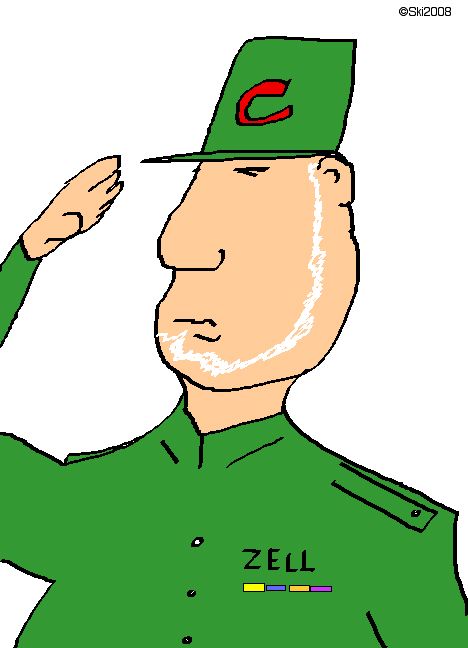
The man who led the coup
at the Chicago Tribune was Sam Zell. Who exactly wanted him to take over the
Tribune media conglomerate is becoming murky. At first, the Chandler family
demanded the Board to cash them out, sell the company, or break it a part.
Investment bankers looked at the Tribune businesses and passed on taking the
company private or selling off the pieces for a profit. Almost all of the
Tribune divisions, cable, television, newspapers, magazines, were struggling
with revenue losses from declining advertising and recessionary fears. The
whole print newspaper industry was under attack from the free internet information
age. There were a few people who poked with a stick around some of the Tribune
pieces but in the end, the Board decided to get rid of the Chandlers as fast
as possible. The Board needed a white knight to put together a deal. Enter,
Zell.
In a transaction that still
has bankers and investment brokers scratching their heads, Zell took on billions
of new debt on top of a debt heavy company bleeding red ink in order to gain
control of the Tribune's assets. Before the deal close, the new alleged owners,
the employees, objected to the lock-up of their stock plan burdened with the
company debts and the lack of any participation in management. The unions
were not happy with a private company with a heavy debt load because that
would mean serious cuts - - - i.e. union jobs - - - on the horizon. The bond
rating companies looked at the prospects of a chairman with no media experience
running a media conglomerate as being junk, as in lowering the Tribune's bond
ratings to three levels below junk status. Since the deal closed, the value
of the Tribune's bonds have tanked which a sign on how the market believes
the deal will end. Badly.
It was the existing Tribune
Board that made the decision to sell out to Zell. In the end, they gave him
not a seat on the board of directors, but a self proclaimed dictatorship.
Zell made the rounds to his major newspaper newsrooms and conducted foul mouthed,
insensitive and bizarre interaction with his professional staffs. He treated
them like dish washers in a prison cafe. One day he said that he would go
forward and make each unit dependent (so it could guide itself to profitability)
but then the next week announce huge staff cuts.
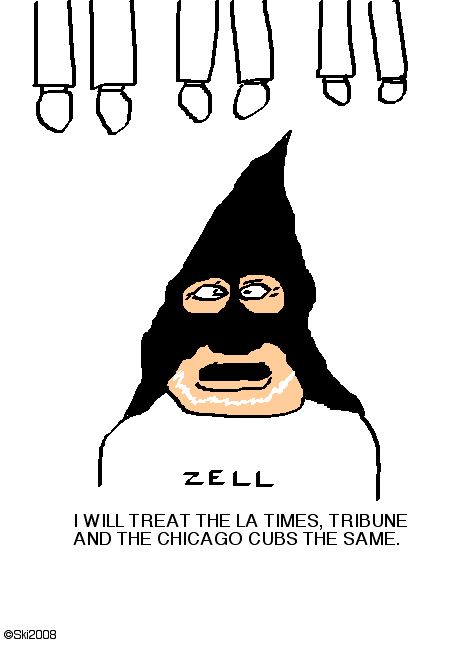
Zell is scrambling
to raise cash. He wants to auction off Cub field box tickets to squeeze quarters
in the big picture. He wants to increase circulation figures to boost ad revenue.
But in a strange marketing campaign, readers have the opportunity to get home
delivery of the Sunday Trib for 99 cents, or Wed-Thur-Fri-Sun delivery for
$1.00, or full weekly delivery for $2.75. The pricing structure makes no sense;
Mon-Tue-Sat editions are worth $1.75, more than the Sunday edition? And the
end of week editions are worth only a penny. Morale must be low in the newsrooms
with a business plan that makes trivial certain editions of the newspaper.
But that what
happens when Zell begins to surround himself with his people. A former shock-jock
radio programmer and a former executive at a rental car agency are Zell's
new lead dogs. He is consolidating control like a boa constrictor on its prey.
The open question is still why. Why is Zell so charging on taking total control
over the Tribune when in the end he put in none of the $350 million (his part
of the initial deal stake; he got that from other private investors). He has
nothing at risk. He is not accountable to anyone. The employee pension stock
is frozen in a trust which Zell controls. So why is Zell taking charge? What
is it (profit) for him besides the power and ego of being a Fidel-like dictator?
He made his money in real estate, so the only real link left is that his real
intent is not to run the papers as a white knight, but to get final control
over the Tribune's trophy real estate properties. Otherwise, this exercise
in corporate takeovers makes no common sense.
See, also
CARTOON MONSOON: FUKUDOME.
FEAST OF PIGS
May 25, 2008
The Tribune
has been in bog of quicksand ever since Sam Zell came to alleged rescue. Zell
continues to hire ex-radio people to run a newspaper-television business (some
say into the ground). The Tribune continues to lose advertising dollars, revenue
and asset value at a faster rate than its peers. The garage sale has begun
with the sale of Newsday to a cable operator. The Chicago Cubs have been on
the block for almost a year but there has been no movement because of utter
greed.
Zell has the
notion that the Cubs franchise is worth a billion dollars. It is not. Forbes
magazine estimated its value in the $650 million range (or less if a new owner
factors in Zell's own comments that Wrigley Field needs $150 million plus
in repairs). The Red Sox were sold for $650 million, and Fenway Park was in
better shape. There is no reason why the Cubs would command a huge premium
in a tight credit and recessionary economy.
Zell sought
to split Wrigley Field from the Cub franchise; hoping that he could get more
from the parts than as a single package. The people who wanted to bid for
the Cubs were not happy with that move. They were bidding for the Cubs and
the ball park. It would make no sense to overbid for the franchise to be at
the mercy of a new landlord. There was also some doubt whether major league
baseball owners would approve such a transaction.
But since
greed was in the air, in Illinois the political pigs will come sniffing around
to see if they can profit from it. The idea that the State of Illinois should
buy Wrigley Field, repair it, so the Cubs would remain in Chicago for the
next twenty years made absolutely no sense. First, there was not even a hint
that the Cubs or potential bidders were going to buy the team and move it
out of town. (The only reason that could possibly occur is if the new team
owner did not own Wrigley Field.) Second, the Cubs operation is supposed to
be highly profitable, with sell-outs at Wrigley for the past decade. There
is no reason for the State to own a piece of property that is functioning
well in the private sector.
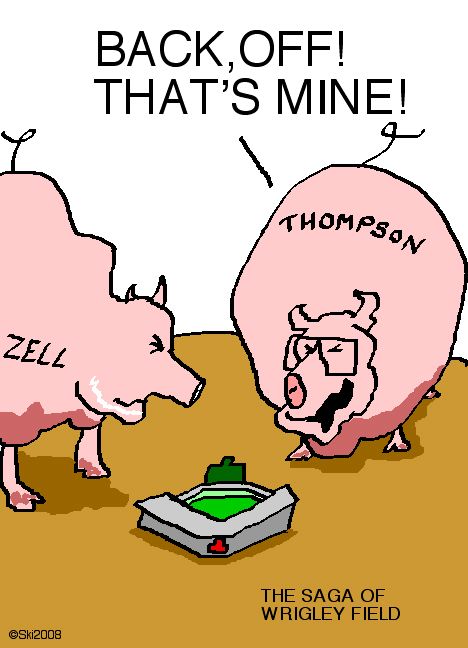
Why this was
brought up was because Zell could not sell the field to a private party for
the price he wants. Credit markets have squeezed and potential real estate
investors never materialized. So the state power brokers, like former governor
Thompson, figure that they could control this revenue producing property to
their advantage, at taxpayer expense.
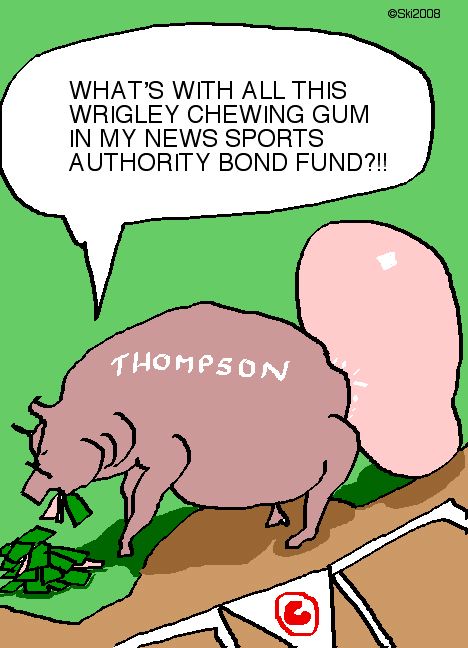
Thompson or
Zell could never tell the public what the complete deal was for the State
acquiring Wrigley. These secret deals are the worst kind. First, it was touted
that the deal would not cost the taxpayers a dollar. Zell would sell Wrigley
to the State for $1. The State would then sell bonds ($150 million to a final
figure of $450 million) to renovate the stadium. The bond amounts made no
sense if Zell was giving Wrigley to the State. He never was because that item
was merely a PR scam. Zell wants the State or anybody to pay him hundreds
of millions of dollars for Wrigley without any credit for cost of repairs.
Also, Zell originally wanted to keep the new naming rights revenue (tens of
millions of dollars in a twenty year annuity). In the end, the State tried
to say that ticket revenue and naming rights would be enough to make the deal
work. But in any bond deal, the taxpayers would be on the hook for a default.
And the default was real because of the amount of money being borrowed exceeded
the amount of revenue Wrigley could generate. By putting a huge burden on
the new owner through a long term lease would plunge the value of the Cub
franchise. Modern professional teams need to control all revenue streams of
their home stadiums in order to survive and compete. The whole State ownership
idea runs contrary to modern professional sports business plans. Then, when
confronted with the reality of the situation, Thompson sought to divert one
percent of the city sales tax to pay for the State bond obligations. Mayor
Daley flipped out and said no, there would be no sales tax sharing with Wrigley
Field. So the final State gasp at corralling Wrigley was a political fundraiser's
claimed patented funding method of selling seats to fans in order to pay back
the bonds. However, this was merely a syntax diversion for a long term personal
seat license. Who would be willing to spend $100,000-$300,000 per seat for
the privilege of buying expensive game tickets? It made no economic sense.
But it did not have to because it was being proposed by politicians who have
no concept of a real dollar because they never spend or risk their own on
any project. The public treasury has been a bottomless well of money. In this
final deal, Thompson and his friends would probably try to squeeze the contracts
and divert revenue streams to themselves through licensing of this seat-license
idea to the State for a percentage of the gross.
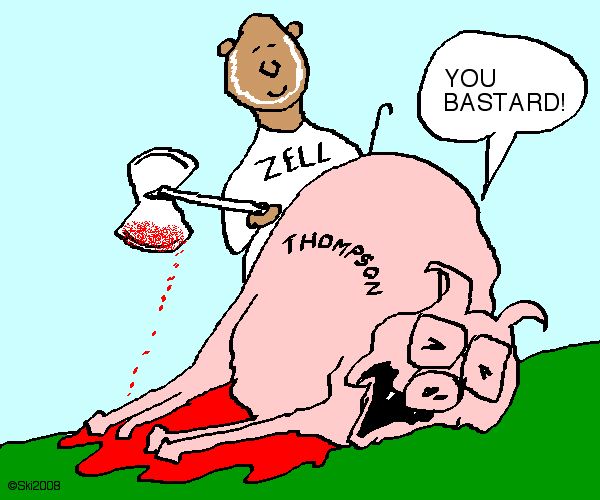
In the final
comment, the Tribune flatly rejected this State plan for Wrigley Field. The
Tribune thought the plan lacked legal and economic merit. It was too risky
to succeed. So the Tribune was now willing to package the team with Wrigley.
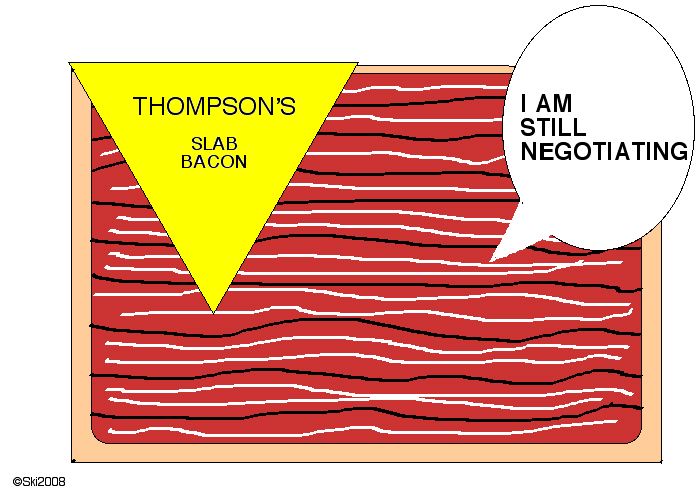
Immediately after the rejection, Thompson proclaimed that the State was still
negotiating with Zell. This calls into question why Thompson and the State
sports facility board is so desperate to get another piece of property to
control with public funds. Let the sinister motivation speculation begin.
CIVIL WAR
SEPTEMBER
21, 2008
Current and
former Los Angeles Times staff members have sued the Tribune, Sam Zell
and his minions. The lawsuit alleges that Zell and others breached their fiduciary
duty to the employees of the Tribune corporation through alleged self dealing,
mismanagement and malfeasance. A review of the allegations finds fault with
the actual structure of the Zell taking the company private by using a new
employee pension plan (ESOP) to acquire all the common shares of the public
company. However, the employees through their ESOP had no control over the
new Tribune company or its management. Zell was in charge.
The problem
with the lawsuit is that it is a hindsight damnation of the Deal. The deal
was disclosed in SEC filings (the suit alleges no securities fraud or misinformation
in the transaction), and voted upon by a major of shareholders of the public
corporation. The massive amount of debt being used by Zell to acquire control
of the Tribune was also disclosed, and some investment bankers at the time
were troubled by the prospect of repayment of such an amount of debt in a
soft economy. But the deal went through. And as a result, Zell hired failed
radio executives to seize the wheel at the Tribune ship, and as the poor staffers
now acknowledge, run the ship aground. Massive layoffs, cutting the news hole,
insane email rants by the alleged innovation executive, steep revenue declines.
The Tribune assets, including the newspapers, were profitable; but no profitable
enough for Zell's debt service. So assets had to be sold, including newspapers
and real estate. But the massive burden of the corporate debt has choked any
value from the employee's pension fund.
What should
have happened was an investigation into Zell and the specifics of his deal
PRIOR TO the actual shareholders vote. The idea of a non-media person being
the chief executive of a media empire in time of crisis makes no management
sense. The actual numbers of the new debt service should have been placed
side by side by the projected revenue (and revenue declines) to show that
it is not feasible transaction in the long run. Remember, private parties
and investment banks looked at the Tribune company before the Zell deal, to
buy the company as a whole or to buy it and sell off all the pieces to make
a profit. Those professional dealmakers all passed on the Tribune. But current
major shareholders, the Chandler family, were pressing Tribune board to buy
them out quickly. In a rush to get the Chandler civil disruption out of the
Tower, management threw in with a perceived guardian angel, Zell, at the last
minute. That last minute has turned into the longest hour for Tribune employees.
GAME OVER
April 24,
2009
The Tribune
has been attempting to sell the Chicago Cubs, Wrigley Field, and its stake
in a local cable sports channel for two years, ever since real estate mogul
Sam Zell took the corporation private through a complex ESOP Trust deal. There
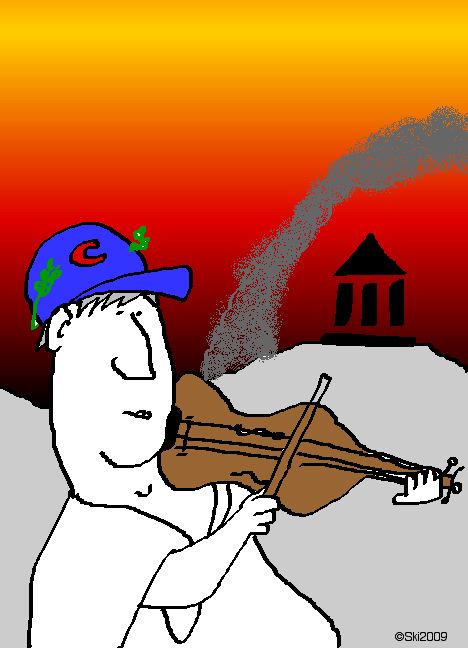
had been a rush of potential bidders for the Cubs, but Zell attempted to play
them all like Jack Benny's violin, giving the groups only piece meal information,
and his high billion dollar expectations of a purchase price. The prize is
a rare commodity, a major league baseball club. But as time went on, the purchasers
did not waive their due diligence. They wanted to see the books, the real
baseball operations ledgers, to see what the Cubs and Wrigley Field generated
in cold, hard cash. After several rounds of bidding, the final bidder, Thomas
Ricketts, the financial and brokerage tycoon family, allegedly bid $900 billion.
But before
this transaction was even announced, Zell attempted to sell Wrigley Field
to the State of Illinois. Then Governor Blagojevich, a big Cub fan, pounced
on the idea that the State buy Wrigley Field so any new buyer would “not
move the team from Wrigley Field.” That was an insane concept because
part of the value and charm of the Cubs is the ball park, Wrigley, the second
oldest venue in major league baseball. No bidding group wanted to bid without
the park. But Zell wanted to get as much money as possible for his properties,
so he wanted the State to buy Wrigley at an inflated price, and then saddle
the new owner with a lease to pay back the State for the cost of the bonds
needed to finance the purchase. The deal was so weak that the State's spokesman
wanted the City of Chicago to waive its sales tax collection at Wrigley -
- - which the city scoffed as insane. The State kept hyping the fact that
Wrigley needed $250 million, then $300 million, then $400 million worth of
repairs. At the same time, Zell was telling his bidders that Wrigley Field
was in pristine shape, no repairs needed by the new ownership.
The State
purchase of Wrigley Field quickly came to an end when Governor Blagojevich
was arrested for public corruption charges on December 8, 2008. The most surreal
charge was that the Governor was allegedly selling Obama's senate seat to
the highest bidder. But also part of this criminal complaint was a charge
that Blaggo demanded the Tribune management fire Tribune newspaper employees
critical of the governor in exchange for the State buying Wrigley Field. It
was alleged and reported in the Sun Times, that Zell was personally involved
in these discussions. (Zell has refused to comment to the press on the allegations,
including to his own flagship paper, the Chicago Tribune, even as his management
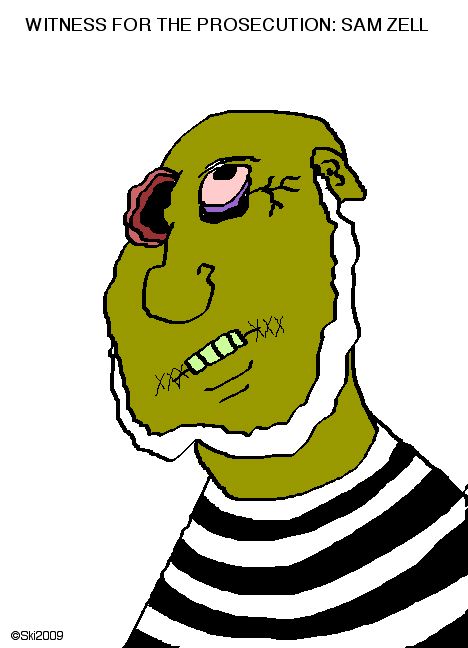
has continued to fire “partners” left and right.) So when the Blagojevich
trial begins, it is apparent that Zell will be at the very least, a witness
for the prosecution.
The Tribune
has been bleeding red ink since Zell took over management of the corporation.
He brought in some radio consultants to run the paper, and they have been
seen as jokes by industry trade press. In the end, the Tribune filed for bankruptcy
protection in December, 2008 because it could not raise enough cash to make
huge debt payments. The whole ESOP structured deal has turned the Tribune
Corporation into a zombie company, one feeding upon the cash and red ink in
a newspaper and media recession.
But things
have gotten worse for the Zellites. The U.S. Bankruptcy Trustee has objected
to the bankrupt Tribune continuing to use a consolidated accounting system
with non-bankrupt entities like the Cubs. The Tribune system of vouchers,
consolidated cash deposits, and intercompany debits-credits may mask the exact
reality of business enterprise.
Early in 2009,
the media reported that Ricketts and Zell were still “negotiating”
the final purchase price, so the sale and transfer of the team would not occur
by opening day. Opening Day came and went with no news. Then, buried in the
schedules filed in the bankruptcy court, we have found that part of the Cubs
sale impasse could be the fact that the bankrupt Tribune owes the non-bankrupt
Chicago Cubs $770 million. A Trib spokesman alluded to the fact that the parties
were discussing “closing credits,” but in reality, a buyer of a
business or real estate would demand credits for accounts payable and/or repairs
needed to the ball park. If the final purchase price was $900 million gross,
the buyer would want the $770 million credited back from the Tribune otherwise
the Tribune gets $1.67 billion in value. The buyer would also want some cash
for the alleged repairs the State railed about in its bid for Wrigley. When
you start talking about those size credits, Zell's billion dollar sale expectation
suddenly turns into $230 million final purchase price, woefully inadequate
to pay the next $800 million bond payment in June, 2009.
It gets worse
for Zell. Ricketts family raised $405 million from their own resources. But
the banks have failed to give them adequate credit to finalize any deal. So
Ricketts recently floated the idea of a private preferred stock sale to raise
another $100 million. One could assume that the purchase price for the team,
Wrigley and cable stake is under $500 million (a buyer needs to have adequate
capital beyond the purchase price in order to meet payroll, operating expenses,
etc.) The deep recession and financial credit crisis has made leveraged purchase
transactions rare. So it appears that the Ricketts bid has stalled and will
possibly fail to materialize.
So the Cubs
would stay the property of the Tribune, and a potential asset of the bankruptcy
estate. Zell and his managers have not proposed any plan of reorganization
to show it can be a viable company. Creditors can object and move to liquidate
the Tribune to pare their losses. If that occurs, Bud Selig and the baseball
owners would cringe . . . the bankruptcy court could sell the Cubs like it
did with the Orioles, without any major league baseball approval.
It still gets
worse for Zell. Ex-employees continue to sue Zell and the ESOP Trustee for
alleged fraud and breach of fiduciary duty in the transaction that brought
Zell to power. The Tribune employees stock in the ESOP is basically worthless
since the bankruptcy filing; the Tribune owes billions more dollars than the
value of their assets. There is also a federal investigation into the complex
structure of the Zell transaction. And if the US Bankruptcy Trustee has reservations
about the Tribune book keeping system, there will be other investigators who
will seek to unravel the books in order to determine if there are other potential
criminal or civil cases to be prosecuted.
Zell admitted
recently on a cable business program that the private purchase of the Tribune
was a mistake. Both current and ex-Tribune employees knew it was a mistake
before that deal was finalized.
DOUBLE HEADER
July 13, 2009
The first
half of another disappointing season for the Cubs has concluded at the All
Star Break. A lone Cub at the All Star game for a team just keeping a float
in the NL Central.
The front
office is in worse shape. The Tribune “sale” to the Ricketts family
has taken more twists and turns than a season of LOST. One week ago, it was
announced that the sale had been finalized and the agreement sent to MLB ownership
for approval. Less than 24 hours later, the story was that no final sales
agreement was signed, but an outline, called a term sheet, was sent to the
commissioner's office to review a few “unusual” aspects of the proposed
deal. This is highly unusual. Ownership usually receives a completed sales
contract, and buyer's financials with a business plan to determine if the
sale is to viable. The last thing the MLB team owners want is a club to go
bankrupt. In 1993, the Orioles owner went bust and a bankruptcy court sold
the Orioles without the consent of MLB to Peter Angelos, the highest bidder
at an open auction.
Then less
than 48 hours about the term sheet agreement surfaced, the Tribune acknowledged
that it was considering a second big from the Utay group. This put the whole
matter really back to square one. Ricketts and their advisors have been stuck
for months on the valuation of the Cubs, especially the broadcast rights paid
by the Tribune's WGN TV and radio. Complicating the matter is that the Tribune
does not break a part its subsidiary units financial statements so it is hard
to determine quickly how well an operating unit is doing. Further complicating
the matter was a filing by bankrupt WGN, which listed a potential $100 million
owed to the Cubs for unpaid or uncredited broadcast fees. This apparently
is in addition to the %770 million Tribune credit due the Cubs from the Tribune's
central accounting ledger. Those two credits equal or exceed the alleged bid
price for the team, Wrigley Field and a quarter stake in a local cable channel.
(The Tribune bankruptcy filings do not clearly state an opinion on whether
the Cubs are actually owed the money, but it leaves open the suggestion that
it could if the team was treated as a separate entity.)
So you go
from one alleged winner of the blind bidding process after 18 months, to two
bidders six months later after some more financial information is disclosed
during the final contract negotiations. Zell and the Tribune have conducted
the sale in such a strange and secretive fashion that it raises more questions
and concerns to a potential buyer. Zell wants to keep a stake in the new Cubs
to avoid capital gains tax on the sale. Zell wants to load the new Cubs up
with debt to lessen capital gains tax on the sale, even though MLB has strict
policies against large debt burdens on clubs (to avoid the owners fear of
a team bankruptcy and loss of oversight and control.)
Today, another
new twist. The Cubs could file its own bankruptcy in order to facilitate the
sale. This would have to upset MLB owners to no end: bankruptcy courts can
approve asset sales without league approval. It is a strange twist because
the Cubs were making approximately a $30 million profit at the end of the
2008 season. However, a weak economy plus back loaded player contracts will
take a financial toll on the club in the next few seasons. So why file bankruptcy?
In bankruptcy,
a debtor can void executory contracts. Those are contracts whose performance
and obligations are for future events. A baseball club could use the bankruptcy
process and attempt to void long term, bad player contracts (Soriano, Bradley,
Fukudome, Zambrano) and take off more than $200 million in obligations for
the new owner. The bankruptcy court could also eliminate contingent or pending
liabilities or contract breaches of the old Cubs, such as the agreement with
the City of Chicago for the parking and retail development next to the ball
park which is now more than five years overdue. But the most powerful tool
a bankruptcy court has is to sell off assets to the highest bidder at a court
auction, without major league approval.
The Tribune's
own bankruptcy required that its creditors and the court approve any sale
of the Cubs since it was wholly owned by the Tribune. However, that court
and US Trustee have been strict in compliance with the technical rules and
objections to the Tribune so far. The Tribune has yet to file a plan of reorganization.
There is no business plan, with or without the sale of the Cubs, for creditors
or the court to consider whether the sale of the Cubs would truly be in the
best interest of the creditors, most of whom have been stayed from collecting
any money for more than seven months.
The reason
for a possible Cub bankruptcy would be to guarantee that the new owner would
not have any contingent liabilities of the Tribune bankruptcy attached to
the assets being sold. However, the Tribune's current bankruptcy case could
provide that protection in the approval order. It smacks of judicial forum
shopping. Further, there was a report that Zell may have used the Cubs as
collateral for the loans he took to take the Tribune private. If that is true,
then the secured creditors who have the Cubs as collateral, would be paid
from the sales proceeds, and not the general unsecured creditors in the Tribune
case. As such, those creditors would most likely file objections and seek
the most money possible in order to see some recovery on their claims.
The long nightmare
of the Cubs not winning a World Series is now beginning to pale in comparison
with the long, strange, winding road of the Tribune's handling of the team
and its potential sale.
IT'S OVER!
August 22,
2009
In two weeks,
the Cubs have fallen from first place to 7 games behind the Cardinals. When
the Cubs starters pitch quality starts, the Cubs offense cannot get a hit.
The team is in total free fall. And so is the Cubs management.
The Sun Times
reported that the conclusion of the sale came after prolonged negotiations
in which the Ricketts family and Tribune Chairman Sam Zell maneuvered for
advantages. The negotiations bogged down as credit markets locked up because
of the recession and a dispute arose over Tribune's evaluation of the Cubs
broadcast deals with Comcast and Tribune-owned WGN-TV and radio. The Sun Times
believes that the broadcast contracts with those stations will continue. And
as part of the sale, the Cubs will file for a voluntary Chapter 11 bankruptcy.
The parent corporation, Tribune, is already in a floundering Chapter 11 reorganization
which has gone no where for the past nine months.
New Ownership
of the Cubs will be a joint venture between the Ricketts' and Tribune, with
the family having management control. Sun Times sources said Ricketts is providing
about $450 million and raising $350 million in debt from bankers. The law
firm McDermott Will & Emery, representing Tribune, said the company will get
$728 million in cash.
Zell and the
Ricketts family may believe they have a deal. But there is a LONG ROAD to
hoe in order to get approval. As stated previously, the Tribune is under the
microscope in three federal investigations. Tribune creditors have been so
impatient with the progress of the Tribune and the declining fortunes of the
industry that they have asked the bankruptcy court to hire a Washington D.C.
law firm with experience in fraud and breach of fiduciary duty litigation
to uncover issues in regard to Zell's ESOP privatization deal.
Here are some
of the major stumbling blocks to the approval of the Cubs sale:
1) MLB
owners and their counsel should have a major fit about the Cubs
filing for bankruptcy protection, separate from the Tribune. The idea
is to wipe out any contingent liabilities the Cubs may have back to the Tribune
or Trib creditors, but the Real News review of the limited bankruptcy financial
filings so far indicate that the Tribune “owes” the Cubs $800 million
in internal accounting vouchers. The Cubs have their own creditors, including
the family suing the Cubs for wrongful death in the wall case, plus the players,
the league, and maybe more important, the City of Chicago who brokered the
bleacher expansion in exchange for improvements that the team never started
(so a huge breach of contract claim and bad blood).
a) In any bankruptcy,
the court must approve any sale of assets after NOTICE and hearing of creditors
or interested parties. A Cubs bankruptcy will need just as much scrutiny
as the Delaware Tribune bankruptcy review of the sale. For example, in an
$800 million sale, why is the Trib only netting $728 million when there
is no mortgage or debt attached to Wrigley? What is the basis for $32 million
credits against the purchase price to Ricketts LLC? Ricketts raised $405
million from stock sales so I do not know if those figures are quite accurate.
However, Zell's opinion of franchise value of a billion dollars was way
off. Forbes was right on with its $700 million valuation last year.
b) In any bankruptcy,
the debtor must be “insolvent” in order to qualify bankruptcy
relief. The Cubs appear not to qualify. If the team did qualify, (more liabilities
than assets), then the bankruptcy judge will have a duty to marshall open
bids for the team sale to maximize the amount payable to general creditors
(MLB owners still cringe at the Baltimore Oriole sale nightmare that brought
Angelos into the MLB country club).
c) By attempting to leave
any “bad debts” in the Old Cubs corporation by selling the assets
to Ricketts LLC, may have the backlash effect on the Tribune bankruptcy
estate. As indicated, the Tribune and WGN financial statements show they
owe the Old Cubs $800 million. For some unknown reason, every Tribune statement
filing comes with a three page disclaimer on what any of their information
means, including whether “non-bankruptcy entities” have claims
for those pooled funds. One could assume that yes, the Old Cubs corporation
would have a claim against the Tribune for those funds. Which means the
Tribune's net proceeds of the Cubs sale could be LESS THAN the amount owed
to the Old Cubs corporation! It may be a circular argument, but it is not
totally clear who owns the Old Cubs corporation. When the Tribune bought
the Cubs from Wrigley, it kept the 1879 corporation (it purchased the stock).
Just before the Trib went bankrupt, Zell shifted the Cubs corporate assets
into a new corporation or LLC. This smells fishy since there was no need
to create a new corporation in order to sell the team, unless, underhandedly,
the ownership of the New Cubs is not 100% Tribune.
d) by the Tribune retaining
a 5 percent ownership stake in Ricketts LLC, creditors including the IRS
could attempt to force the sale of that 5 percent stake in order to pay
tax levies or other creditors. That means the bankruptcy court, having full
power to sell an asset, even joint assets, at public sale, could unwind
the Ricketts deal. A forced sale of the minority interest i) would trigger
the juicy capital gains tax to a cash hungry federal government (a cool
$60 million), ii) the prospect of Ricketts losing control of the team unless
they re-bid, and iii) creating a default with the new secured lender. For
example, husband and wife own a house together in joint tenancy. Husband
goes bankrupt, wife does not. The bankruptcy court has the power to sell
the joint house, paying 50% of the proceeds to non-bankrupt wife and 50%
of proceeds of Husband to his trustee and creditors. That is why I would
have never recommended Zell keeping any stake in the New Cubs organization.
2) Cubs fans should worry
about the new ownership and the immediate need to increase revenue. As everyone
is aware, the Cubs have tapped out every dime from Wrigley Field, merchandising,
etc. With the deal keeping WGN in sweetheart contracts, there is no new revenue
source from broadcasting to tap. That means it comes down to increasing fees
to the consumers. Ricketts will need at least $45 million in new cash just
to pay the Bank. (MLB owners hate the idea of a bank, a secured lender, being
able to foreclose on a team or stadium in case of default.) In the only statement
on the profitability of the Cubs we are aware of, after 2008 season, the Cubs
may have made a profit of $12-15 million. That means Ricketts tenure will
start at least $30 million in the hole in 2010.
a) The probability of
season ticket holders having to pay $20,000 “personal seat license”
fees to keep their tickets was floated yesterday. In this economy when corporate
marketing departments have no budgets, to pay $40,000 to $100,000 just for
the privilege of buying overpriced baseball tickets will not go over well.
The individual family season ticket holders will drop out, too because that
is college tuition for a year or two. People are hoarding cash today, not
spending like drunken sailors to watch a bunch of losers stumble around
a park playing a child's game.
b) It is absolute that
ticket prices will have to increase in order to satisfy the lender that
payments and cash flow will be sufficient to pay back the loan. That is
$15 on every ticket for every game. For season ticket holders, that is another
$1,215.00. Again, current ticket prices are at the breaking point for the
average fan. Adding another $30 to $75 for a family to go to a game may
just be too much.
c) I do not think the
loan covenants will allow major outside the ball park expansion plans. We
suspect any capital budget will be for renovation and maintenance of Wrigley
Field and not the past due Triangle annex (car wash property development
of parking, retail shops, Cubs museum). We suspect Ricketts may have to
sell the Triangle property in order to raise cash to meet operating expenses,
because the Cubs may not draw 3 million fans next season (based on the economy,
ticket prices and the major disappointment and unlikeability of the 2009
squad). If the White Sox go far in the playoffs, the Cubs will draw even
less.
d) The first priority
of Ricketts is to increase revenue from Wrigley fast. Steve Stone once hinted
that if he owned the Cubs, he had a plan to reconstruct the center field
scoreboard. It is speculated that he meant that he would leave the outer
shell, create a huge jumbo tron in the middle for advertising, and new center
field skyboxes in the lower portion. The only other means of expanding revenue
inside Wrigley is i) increase concession sale prices, ii) pay toilets, iii)
expand the grandstands up and out toward the field to add seating, or iv)
deck the bleachers (like old Tigers stadium) which would obstruct the roof
tops and probably violate city ordinances. Since the bleachers are mostly
a summer tavern, Ricketts could open the stands when the Cubs are not playing,
sell beer to the yuppie scum, who don't watch the baseball games anyway.
More concerts, corporate outings, tours . . . will all find neighborhood
objections.
3) Richie Rich Syndrome.
If Ricketts does get the franchise, what type of owner will he be? Writer
Steve Rosenbloom was on the radio this morning and he went through the rogue
gallery of stupid, inane, dumb Cub presidents, including Stanton Cook, McDoogie
Houser, and Crane Kenney . . . saying that each of those dopes did nothing
but impose themselves on the team without creating any value . . . that basically
in lieu of a retirement watch, the Tower directors would send their executive
losers to be President of the Cubs. Crane Kenney's last few weeks have been
a nightmare, bringing friends to picnic in centerfield during batting practice
to going into the players locker room, copping food from the buffet table,
and trying to force himself into the situation. What for? Because he is the
team president and had nothing to do. Tom Ricketts has the same potential
problem of being an interloper: son of a rich financial magnet, now without
a job at Ameritrade because the family sold its majority stake in that firm;
he will have nothing left to do but be Cubs owner/president. He may have to
do a Rocky Wirtz and axe all the old man's cronies in layered management to
set the new tone.
The current Cubs management
style was to be over kill in positions without any real responsibilities.
Kenney has been lobbying HARD to retain his position with the Cubs. We'd kick
his ass out the door. Ricketts will need to fire all vice presidents from
field boss up the chain (just to save some money) and bring in his own people
to broom sweep out the rat's nest of the Hendry baseball operations. Hendry
signed himself to a long term deal, but we would kick him to the curb anyway.
The one possibility if the Cubs do file for bankruptcy in order to wash liabilities,
the new Cubs ownership may NOT WANT Hendry's contract or the Old Cubs in bankruptcy
could VOID any executory contract (one with future performance) such as Hendry
and management's sweetheart deals, and could include ill-timed, expensive
dead weight player contracts like Soriano and Bradley (but the Players Union
would have a riot if that occurred and the CBA talks would go nuclear.) But
that is an option in bankruptcy court.
Sun Times reports manager
Lou Piniella wants back for his last year, but that is not his call (club
$5 million option). There are other, cheaper managerial alternatives. I believe
Ricketts will not retain Piniella, but instead promote Sandberg to be his
first manager, with Jody Davis as his bench coach. I would then reach out
to G reg Maddux to be pitching coach (or if declines, spring training instructor
to keep him in the organization until he wants to be a pitching coach).
So no matter how the newspapers
report that the Cubs transaction is “a done deal,” it is far from
true. Angry creditors, and IRS looking deeply into Zell's financial transactions,
and the US Trustee's office suspicious of all the Tribune's accounting systems
all have the firepower to de-rail this proposed Cubs sale. Also the fact that
Zell keep beefing to the media that he was going to get a billion dollars
for the Cub assets, and now feebly takes $728 million cash, those creditors
waiting since December for a billion dollar loan payment or two may want the
bankruptcy judge to really open the bidding to everyone in a bankruptcy sale
auction. Also, MLB owners may also balk at the prospect of the Cubs being
a heavily debt ridden franchise, with no real business model to increase revenue
quickly to meet obligations. The owners cannot afford to bail out its members
in this economy. The bottom line is that it is never over until it really
is decided in the bankruptcy court.
FINE PRINT
September 26, 2009
The most un-reported aspect
of the Chicago Cubs sale is contained in Exhibit F-4 to the proposed contract,
under Certain Cubs Excluded Liabilities:
Any obligation,
liability of Loss, whether civil, criminal or otherwise, of any Tribune
Party of any of its Representatives related to or resulting from any discussion,
communication, understanding or agreement between any Tribune Party and
any state, city or other Governmental Authority in the State of Illinois,
including the Governor's office, the Illinois Finance Authority and the
Illinois Sports Facilities Authority, or any official or Representative
thereof regarding the sale, lease, disposition, renovation or financing
of Wrigley Field and any matters related thereto or resulting therefrom.
Tribune Company has fully cooperated with the relevant authorities in connection
with the matter and, as previously publicly disclosed, Tribune Company continues
to believe that the actions of the company and its executives and advisors
working on such matter were appropriate at all times. Further, there have
been no material developments on this matter with respect to any Tribune
Party over the past several months.
The corruption in the State
of Illinois has been so bad that the US Attorney in Chicago has been pumping
out indictments as fast an auto manufacturer produces cars. The Tribune and
Sam Zell got caught up in one of the state power broker's public money plays
when Zell was allegedly contacted by ex-Governor Blagovich representatives
about selling Wrigley Field to the State in exchange for firing critical Tribune
editorial employees. This pay-to-play scheme seems outrageous to outsiders,
but it appears that anything and everything was for sale by public officials.
Even admissions at the University of Illinois were run through the cess pool
of clout, with unqualified students getting into the school over qualified
candidates because of connections in the political leaders.
Buyer's counsel and advisors
must be well aware of the sinkhole that the Tribune has positioned itself
when dealing with the inner circle scum. In the realm of possibility is that
the Tribune, its executives and/advisors could be indicted as co-conspirators
in a scheme to use Wrigley Field in some sort of insider transaction, pay-to-play,
dishonest government kickback scheme. Supposedly, Zell was interviewed by
federal agents about the contacts he had with the ex-governor's office on
selling Wrigley to a state sports facilities board. However, it is unseemly
that Zell has never once talked to his own newspaper reporters to give his
side of the story!
Just because there has
been no criminal investigation reported in the past several months, does not
mean the US Attorney investigators have dropped the case. The tanglement of
public power and private gain is such a mess that it takes time to unravel
the players, their motivations and their profiteering prospects. The kicker
in the Wrigley sale to the state was that the price would have been inflated,
paid by public dollars which more would be diverted to insider state contracts
for renovation or management, while Zell raised desperate amounts of cash
for the bankrupt Tribune coffers.
The worst case scenario
would be that the foundation of a criminal enterprise was the sale of Wrigley
Field to the state agencies. As a criminal enterprise, forfeiture laws could
lend themselves to allow the federal government to seize Wrigley or other
assets that were used as part of criminal scheme. However, even though the
Wrigley deal never went through, an alleged conspiracy to commit illegal activity
in itself is a crime.
The Ricketts bid of $845
million had to insure some sort of liability acknowledgment on behalf of the
Tribune. But it may be hollow. The Tribune is still bankrupt, with no viable
re-organization plan adopted by the court. In addition, one cannot contract
away criminal or civil liabilities against law enforcement actions. If the
US Justice Department wants to make an example of the alleged slimy dealings,
it could put the Buyer of the Cubs in an awkward position of holding property
that was part and parcel of an alleged criminal enterprise to defraud the
public (and the teams' own taxpaying fan base.)
But this criminal investigation
is not all the fine print in the pending deal. The Internal Revenue Service
is in the process of auditing the Tribune, whose accounting system is Enron-like
at best, with intercompany accounts and vouchers that have yet to be understood
and fully explained to creditors. In addition, several tax experts call into
question the structure of the Zell-Ricketts deal as one to avoid the Tribune's
capital gains tax if it was a straight sale. If there was no sale, Zell could
have mortgaged the Cub assets and received a substantial sum of money. In
a provision that only tax lobbyists would love, if a company reorganizes its
assets by transferring them to a new legal entity, maintains at least 5 percent
ownership, and borrows against those assets and the mortgage proceeds is returned
to the asset giver, so long as certain requirements are met (like keeping
an ownership interest in the new company for five or more years), then no
sales capital gains tax is due. Ricketts is putting in $400 million for 95
percent ownership, Tribune is putting in the Cubs assets for 5 percent ownership
of New Cubs company, and it will borrow $425 million, and afterward, Tribune
is pulling out $745 million (the net sales price). It sure smells like an
arms length sales transaction. But the Tribune points out that it is an owner
of New Cubs, and it guaranteed the New Cubs debt so it meets the requirements
of the tax break. But critics point out that the Tribune's guarantee of new
debt is worthless: the Tribune is insolvent and in bankruptcy!
So, the Cubs assets are
subject to a criminal investigation, an IRS bankruptcy audit, and possibly
an IRS tax lien on the sale, there is still more fine print that Cubs fans
may never understand fully until the finances of the New Cubs falls down faster
than Wrigley's deferred maintenance. In the business plan, it appears that
after the Cubs sale is approved, the New Cubs organization will be at least
$425 million in debt (principal) and another $35 million (capital working
line of credit). The New Cubs will have $460 million worth of debt to repay
quickly, in the 5 to 7 years at standard commercial note rates and terms.
It could conservative mean debt service of at least $53 million per year.
Now, it was reported that the Cubs only made a profit of $12-15 million in
the 2008 season, when Cubs revenue and attendance was at its peak. With a
gloomy economy and the 2009 season falling flat with a disliked team of underachievers
and misfits, Cubs revenue would appear to be falling in the next few years.
Expenses, especially the back loaded player contracts the Tribune approved
(because it was selling the team) will rocket payrolls from $160 million to
$200 million. The cash crunch on the 2009 Cubs was clear when the team could
not add any player without equalizing the salary by moving other players to
keep the payroll in balance. Just simple math shows that the 2010 Cubs will
probably be operating at a loss of $40 million. In addition, the $35 million
line of credit is woefully insufficient to pay the reported $100-300 million
in renovation and repairs needed to Wrigley Field and the adjoining triangle
parcel redevelopment promised to the city years ago.
Major league baseball owners
still have to approve the Ricketts deal. MLB owners are fearful of two things:
teams going bankrupt and IRS audits. Both are huge risks in this Cubs sale:
the New Cubs company will be saddled with a large debt burden, slowing revenues
and increasing costs (especially payroll). The New Cubs could be considered
“on paper insolvent” from day one. If the New Cubs goes bankrupt,
then the bankruptcy court could auction the team to the highest bidder, and
another Baltimore Orioles sale to an unwanted person could happen. If the
New Cubs team defaults, then the secured creditors could force a sale of the
team which would cause additional chaos and management issues. If the IRS
finds that there was a tax avoidance scam, it could level the tax and huge
penalties and interest on the parties, and could collect by a levy against
New Cubs assets. There appears to be “no deep” pockets as the Ricketts
liquidated most of their shares in Ameritrade to raise the cash to buy, and
the Tribune has no money to re-invest in the Cubs.
Then there is the concern
of the Ricketts owning the team going forward. It was reported that Ricketts
would retain all current Tribune-Cubs management, including GM Jim Hendry,
whose off season signing of free agent Milton Bradley, for three times the
market rate and for three years, would have gotten any other business executive
fired for wasting $20 million in company funds. One would have expected Ricketts
to have gathered up his own baseball expert advisors before he made
his bid for the club. And those advisors would replace the existing
management, so they would be loyal to the new owner. If Ricketts keeps the
current management, then it is an endorsement of the marketing over baseball
intelligence for the team; keeping the lovable losers has worn thin in the
fan base whose expectations are now high after two playoff runs (and post-season
collapses). The country club home team clubhouse culture needs to be changed
at Wrigley. If Ricketts is merely a rich kid who needed a cool job, then he
is no different that the Tribune executives who were booted out of the Trib
Tower and into semi-retirement as President of the Cubs.
The new combination of
Chicago Cubs and Ricketts creates the Chicago Cricketts, a potentially loud
and obnoxious pest, much like right fielder Milton Bradley has been for the
entire season until his suspension by the club (with pay).
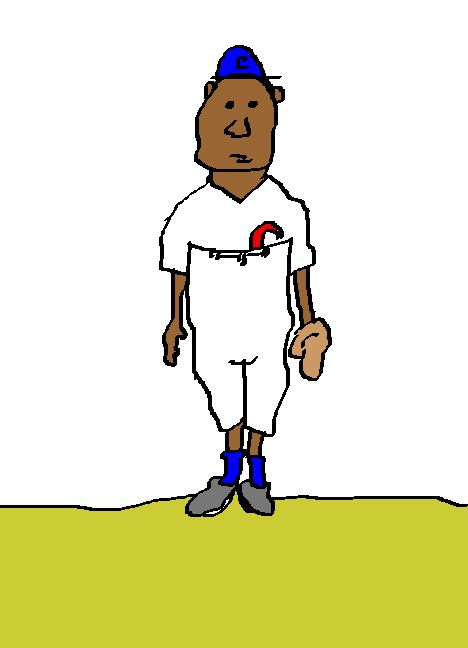
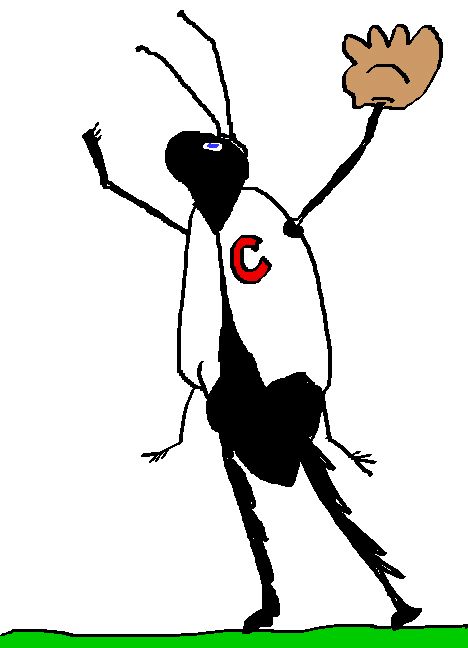
Cubs right fielder
Milton Bradley, left, played most of the season like an old man lost at sea.
His potential new replacement, right, may be the new team mascot, a loud,
annoying crickett.
POSTER BOY
March 13, 2010
Long time fans are uneasy
after the Cubs sale was finalized with the Ricketts family. The family vowed
to pour the profits of the team back into operations. However, they never
said that they would be putting any more of their own family fortune into
the club. With the massive debt load of the sale on the books, the Cubs realistically
have to extract another $25 per fan per home game in order to break even.
Ricketts said that the Cubs payroll would be the same as last season; but
Hendry's contract overpayments for stars in the decline years, signing free
agents before arbitrations completed, and trading garbage for some one else's
garbage has left the roster bloated, inflexible and over budget.
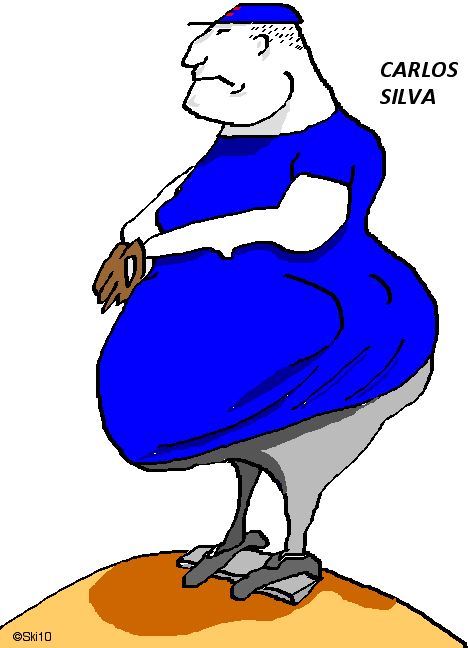
Carlos Silva is the 2010
Cubs Poster Boy. He was horrible with Seattle last season. Injury plagued.
Overweight.
Signed to a big fat contract
to match his girth. The Cubs were so desperate to trade failure Milton Bradley,
they had to take back Carlos Silva in return. Now that Number 2 starter Ted
Lilly is on the mends from surgery (and could be out to May), and Rich Harden
is gone, the Cubs rotation is short three players. The bullpen was a reconstruction
project, too. Now Angel Guzman, whom Lou Piniella said was the key to the
bullpen set up role, is lost for the season due to shoulder injury. Overpaid
lefty John Grabow is not a closer if Carlos Marmol fails. There may be three
rookies in middle relief before camp breaks at the end of the month. The Cubs
bench is also very weak. Hendry signed out of work, beyond their prime candidates
of Chad Tracy and Kevin Millar, who tried to score from third on a single
last evening. He was slower than frozen molasses. He made Keith Moreland look
like a track star. He was thrown out at the plate by such a wide margin that
the catcher had time to balance his check book. But Millar appears to be a
player without a position who will probably make the club because he has gray
hairs like the manager.
It is shaping up to be
one of those P.K. Wrigley teams. Several popular players, day light baseball,
a nice day in the park, cold beer, a nice day in the park . . . and questionable
prospects for the post-season. Now, considering that ticket prices have gone
up dramatically this off season, and the team trying to squeeze every penny
from fans (including a premium fee just to buy single game tickets early),
the only improvements to the ball yard of note is that every single corner
space is now going to serve beer. Yes, beer apparently is the business model
for the Ricketts family. Sell more beer at the north side's largest tavern,
Wrigley Field. More beer, more drunk fans, the push for more non-Cub use of
the park for concerts will lead to more friction with the neighbors and other
local businesses.
NEW SHOTS
May 1, 2010
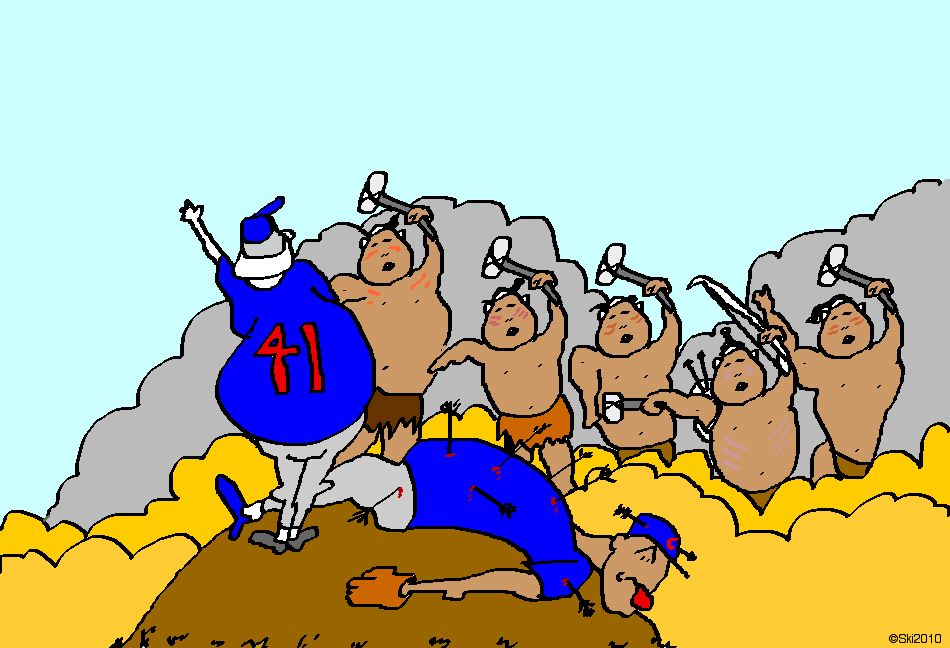
The season started with
a scalping in Atlanta by the Braves. Carlos Zambrano, the ace of the staff,
faltered worse than normal. It was an unknown precursor for a flat April that
will probably cost the team any playoff hopes and their manager his final
season swansong to glory. Cub pitchers, including Carlos Silva, rolled off
a league leading measure of quality starts, but the Cubs offensive was still
in hibernation or extended spring training. The Cubs could barely scratch
.500 before falling back again and again.
The team came home to a
disgruntled neighborhood. The new owners, the Ricketts, have decided that
since they put in an alleged $10 million in repairs and maintenance to Wrigley
Field, the people of Chicago should bow down to their new royal status. However,
it is certain that most of that money went into revenue producing areas in
the park. A new $28,000 per season ticket suite club from unsold luxury boxes.
More beer vendor stands in every corner of the ball park. A new restaurant
under center field with gourmet food prices and plexi-glass of the batting
cages. And the move to have these new interior venues being open 365 days
per year.
In addition, a new casino
sponsor on the roof top across the street from the left field fence brought
the anger of the new owners. They vowed to cover the left field fence with
plywood. And just before the season started, they wanted a large Toyota sign
be erected in the middle of left field. Ricketts thought the sign would be
an easy sell and easy new revenue because since purchasing the club from the
bankrupt Tribune has been finding as many money streams as quickly as possible.
Freeze payroll. Squeeze more dollars from each fan. Add more competition to
the neighborhood taverns and restaurants.
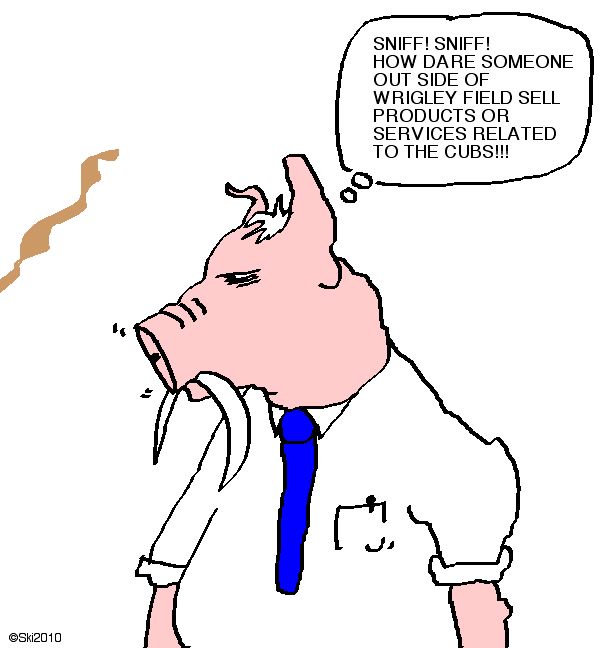
The city balked
at the sign so it was not up and generating profits by opening day. The roof
top owners across the seat were not happy with an obstructed view. In a fuming
bitterness, Ricketts does not understand how landmark status means that outsiders
have final control over any structural changes to his ball park. This may
be the first time that Ricketts was told to take his seat and be quiet. The
rich man's son has a long learning curve about running a noisy business in
a residential neighborhood. Ricketts wants more summer concerts, and events
during the winter months like Northwestern football.
Ricketts did
not hire true baseball people to review the Tribune-Zell sales sheets. If
he did, he would have known that he overpaid for a franchise that maxed out
on revenue (with sweetheart locked in broadcasting rights through Tribune
properties). The back loaded payroll is coming back as a ticking nuclear device.
Hendry thought the new owner would open up the checkbook in the post closing
euphoria of owning a franchise to spend, spend, spend just like the Tribune
did not care to spend the new owners' money by signing Soriano, Zambrano,
and others to outlandish contracts. Now, Hendry is trapped by his own freewheeling
drunken sailor spending spree since Ricketts said he would put all the revenue
back into the club (but more importantly, not put another DIME of his own
money back into the club.) This expensive hobby must now sink or swim on its
own revenue and expenses.
To further
stick it to long term fans, Ricketts promised to move the spring training
quarters from Arizona to Florida if Mesa and the state did not meet all of
his public financing demands for a new facility. When the Naples equity ball
park complex was announced, there was little doubt that Ricketts would make
a decision solely on how much additional money he could get out of some snowbird
city. With Arizona lawmakers balking at the taxation and development bonds
needed to make the proposal work, the odds now shift away from Cub fans in
Arizona to the Florida investors.
It has been
a rocky opening month for the Cubs. The team's play has been as sporadic as
their owners' vision for the team.
SEASON OF SORROW
September 5, 2010
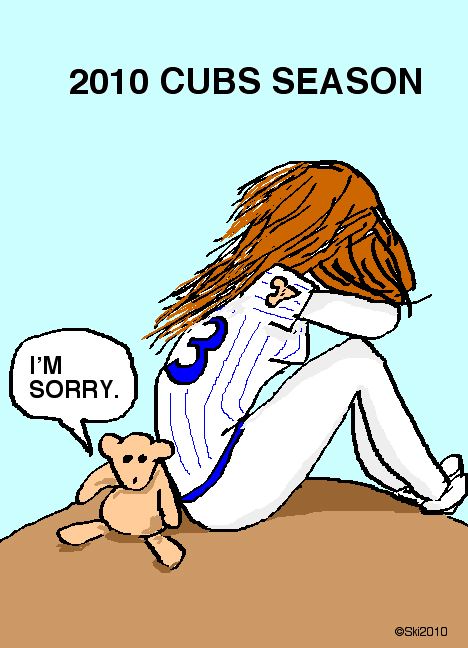
It will be the September
not to remember.
True Cub fans knew the
season was over when the Braves scalped and burned the fort on opening day,
16-5. Moderate Cub fans knew the season was over when Carlos Zambrano imploded
then wound up suspended due to mental problems of anger management. Casual
Cub fans knew the season was over when manager Lou Piniella quit, and the
team's farewell was another tomahawk loss to the Braves, 16-5. The Cubs have
been giving up football scores to opponents all season long. Yet, GM Jim Hendry
foolishly proclaims that he is only three moves away from the post-season.
Yet, the 2010 Cubs were a sorry excuse for a professional ball team.

No one from the front office
has apologized to the fans for the Cubs horrible season. It was clear that
even though the emphasis from the new owners was to win a championship, the
wave of expectations would not break the levy of top heavy payroll to put
real players on the field. Ricketts said from the beginning that his family
would not put in any more money into the team; it had to sink or swim on its
own balance sheet, revenue and expenses. The Tribune management which stayed
on with Ricketts blamed the old management (themselves) of the dead money
contracts that will choke the club to death for the next five years. The only
concern of the owners were more revenue sources: more advertising, more beer
vendors, more expensive food venues.
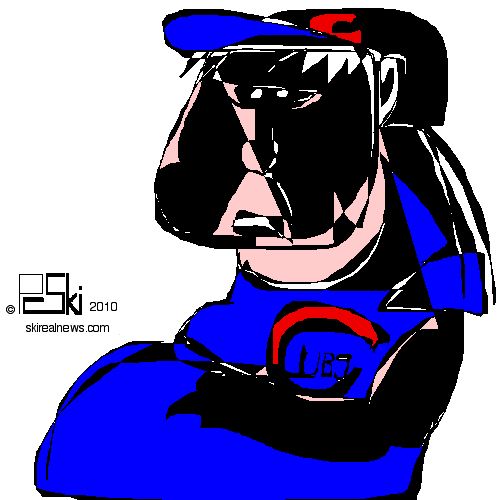
Piniella knew the team
was going no where. His bullpen was filled with overhyped underachieving minor
leaguers that Hendry had acquired over the years. His prized prospects were
all 88 mile per hour flat fast ball pitchers. Interchangeable batting practice
pitchers is what the opposition found most of the time. Adding insult, the
position veterans laid down and slept through the season: Soriano, Ramirez,
Lee - - - dreadful seasons. The pampered veterans of the club house did not
care as the hot days of summer came upon their woeful record. And Hendry avoids
controversy by not having any minor league talent ready or able to compete
for a starting job. Only 19 year old Starlin Castro displaced a more expensive
player, Theriot, at short stop. Platoon outfielder Tyler Colvin spent most
of the first half of the season collecting splinters on the bench because
of the $30 million disasters of Soriano and Fukudome being showcased for other
non-buying teams. The team began losing attendance at double digit rates in
August . . . which hits the top line revenue number hard. So hard that Hendry
was forced to trim $4.5 million in payroll (Lee, Lilly, Theriot, Fontenot)
for mostly marginal low level prospects.
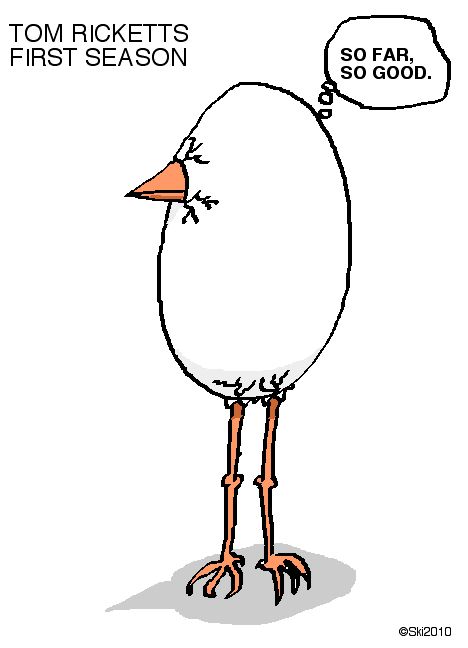
Owner Tom Ricketts was
unsure about a raise in ticket prices for 2011. He said revenue is the key
to what happens with the club going forward. The Cubs already have the highest
average ticket price in the major leagues with one of the most inferior, frustrating
products on the field. It is not even entertaining anymore. Fans came not
to like the players on the team. Indifference has turned into hatred. They
are tired of 3B Ramirez playing matador on routine grounders to third base;
they are tired of the fundamental base running mistakes; they are done with
hairpulling when pitchers cannot throw a simple strike; they are upset that
the team cannot manufacture a run to save their own lives. How ownership can
go to the well again and raise ticket prices will really tick off the seasonal
base.
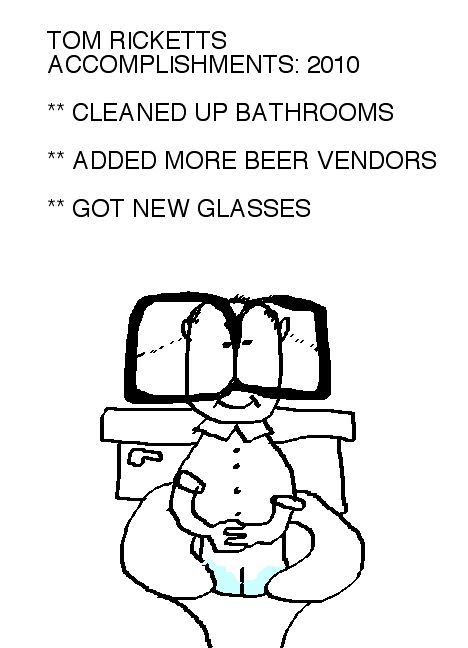
The real problem with the
team may be with the new ownership. They just don't seem to realize what it
takes to run a baseball team. And it appears they are tight wads in putting
in any new capital. If they are cheaper than P.K. Wrigley, then the team is
doomed. But at least Wrigley had the sense to apologize after a dreadful season.
THE OFF SEASON
October 31, 2010
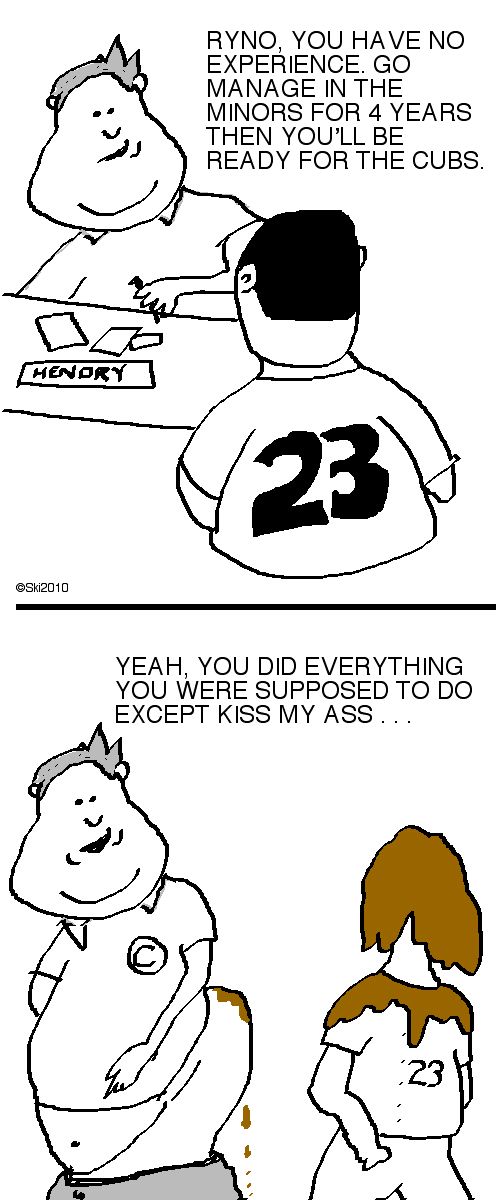
Ryne Sandberg
did more than any Hall of Famer was ever asked in order to prove that he was
major league managerial material. He spent four years in the Cubs minor league
system. At every level, he produced; his teams won. He was developing talent.
He was respected by the prospects. He had the credentials to have authority
over his teams and earned the respect of his peers by being named PCL Manager
of the Year.
So when Lou
Piniella retired, it was thought that Sandberg had completed his apprenticeship
and would join the big league squad. But GM Jim Hendry put third base coach
Mike Quade at the helm for the end of the season. With no pressure, the Cubs
reverted to a winning record - - - which Hendry used to convince the new owner
to let Quade continue to manage the team.
It is no secret
that Hendry never wanted Sandberg to manage the Cubs. He never thought that
Sandberg would go manage Class A ball in Peoria. But what really burns fans
the most is that Hendry's insecurity led him to keep Sandberg under contract
during the interview process so Ryno had no opportunity to seek employment
in Seattle, Toronto or any other club that started their searches at the end
of the season. It seems like a petty dig at Sandberg to justify not hiring
him by saying to the world “look, no one else hired Ryno to manage.”
But true fans will realize that Ryno would not get a job easily because Hendry
blocked him from the winter job market.
It is going
to be a bitter pill to swallow for naive Tom Ricketts. Those empty bleachers
in August and September may turn into empty bleachers in May, June and July
next year. Quade has been in the professional baseball profession for 17 years.
And the Cubs are the only team during that entire time frame that interviewed
him for the top spot. And it turns out that Quade is part of the LSU connection
of Hendry and Asst. GM Randy Bush. The old boy network was at work again,
and this time Sandberg was the punching bag.
In a macabre
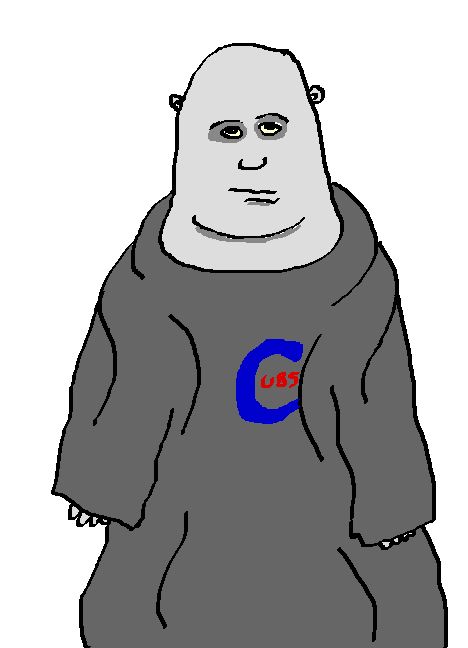
way, Hendry got his friendly club house spy to sooth his own ego. Quade looks
like Uncle Fester from the Addams Family. It will only be a matter of weeks
next season when the Cubs country club clubhouse returns to form, as high
priced veterans in the decline of their careers refuse to put out any extra
effort since they do not have to . . . they are dead money payroll with no
trade contract clauses. It is like early retirement in a party town. And the
sitcom mentality is on the season ticket holders, who will get stuck with
more premium game prices. For example, next season a prime bleacher ticket
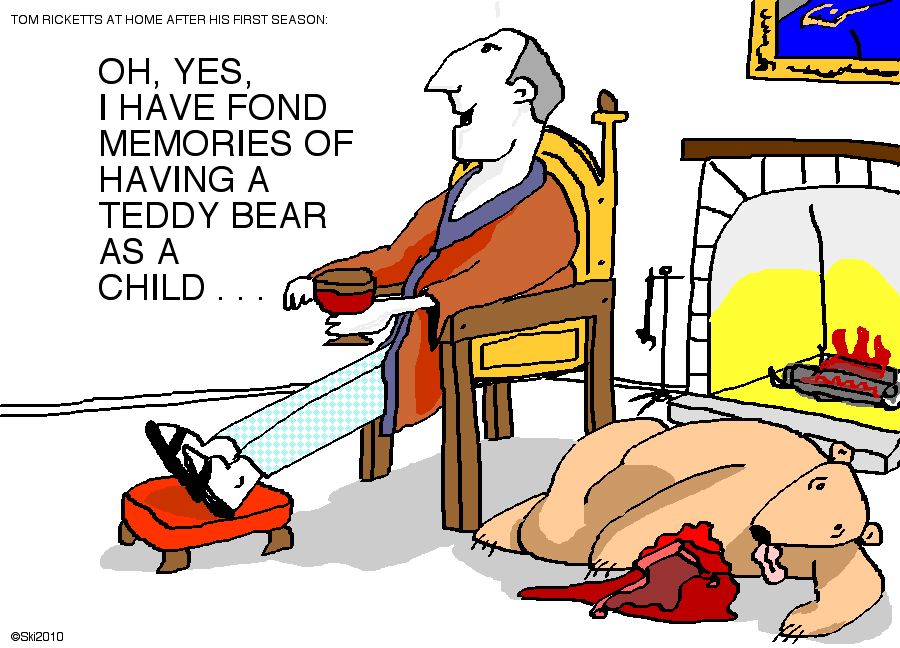
will cost $81! Oh, well . . .
DISQUALIFIED
August 14, 2011
There may have been some
causation between the arrogance of the engineers and crew of the Titanic and
their ultimate fate in the history books. Likewise, when Cub general manager
Jim Hendry said he was only two or three pieces away from a championship team
this spring, little did we know that the three “little” pieces were
only PITCHING, OFFENSE and DEFENSE. Other than those three areas, the Cubs
are fine.
Before the Tribune sold
the Cubs, Tom Ricketts took his father to a rooftop for a game. He told his
father that the Cubs were a great business; that the team sells out whether
they win or lose. The fans continue to come out to have fun. Ricketts made
those naive observations at the peak of the Gen X bleacher party days in a
heady economy that was just about to burst. Ricketts believed that Cub fans
were perennial sheep; they would continue to come to Wrigley Field, their
baseball church. They would continue to buy overpriced season tickets. They
would continue to support the team. They were hypnotized by the Lovable Losers
from their collective youth.
But the Cubs started off
poorly, again. The excuses poured out like the constant thunderstorms that
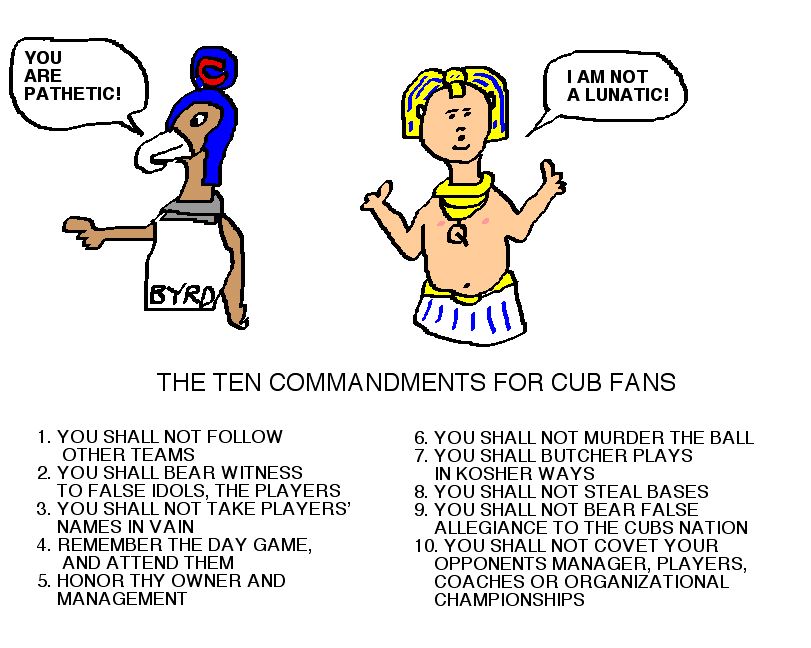
plagued the Midwest this year. Even normally quiet Marlon Byrd ripped the
fans when they started booing his poor play. He got into a long, loud argument
with a fan. The players have been in their own country club lounge cocoon
for years. There has been no accountability so there was no pressure to really
give 100 percent on a daily basis. The new coaching staff were minor leaguer
rookies for whom the players had little to no respect. The inmates continued
to run the asylum not realizing that the fans were demanding more from them.
Cub management thought
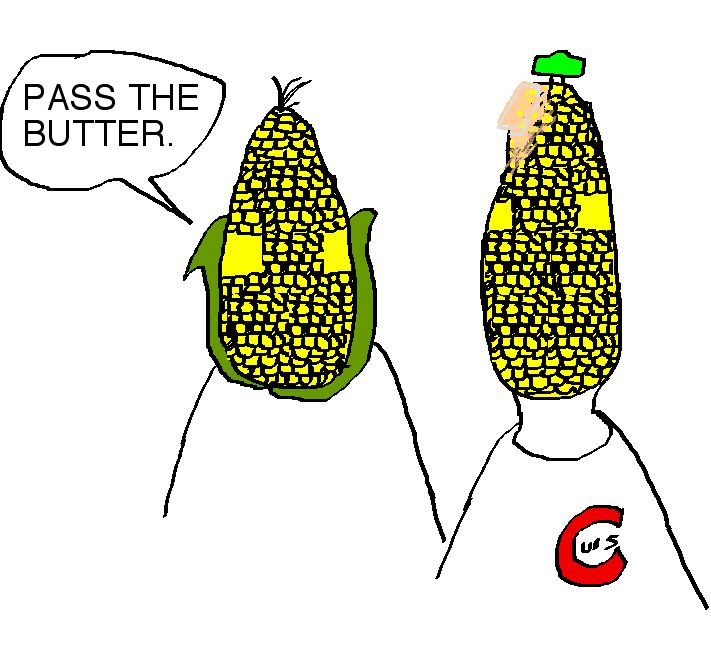
that the rubes from Iowa, the large group bus trips, would continue to flock
to see the team even in the worst of times. Those corncob fans would take
a full section at a time during summer homestands. But this year, one could
see the last section in the lower bowl empty; and complete sections in the
upper deck collecting dust. The Cubs did not forecast the rough economy, high
gasoline and food prices, and a very unlikeable team. The groups stopped buying
large blocks of tickets. A game sell-out is now a rarity. Once a seat goes
unsold, that money is lost to ownership.
In panic moves, management
has tried to bring more fans into the park. Massive email advertising through
MLB. Bleacher giveaways of food or beverages during night games. Tours of
Wrigley by ex-players to drum up more interest and a few more dollars. By
the time school was out (and not excuse was gone), a Wrigley vendor said that
he was selling around half the amount of beer trays he used to do. Even when
people are coming to the park, they are not spending the anticipated $50/head
in concessions that Ricketts had been counting on. Saddled with huge deadwood
no trade contracts, a heavy debt load from overspending for the team, the
new ownership has to be losing money from club operations. And since old man
Ricketts said at the beginning, the family would put no more capital into
the business, the Cubs had to be self-sufficient. The team is not. That is
why Ricketts made a blunderous attempt at getting the state to pay from Wrigley
renovations in a another crazy tax swap scheme. It was blown out of the water
faster than a hungry shark in JAWS.
The mistakes from the Zell-Tribune
era remain with the current Cubs because Ricketts refused to spend any money
on hiring his own “baseball” people to give him independent guidance.
Ricketts insulted the intelligence of fans when he said he did not believe
in hiring a baseball guy to oversee a baseball guy to oversee another baseball
guy. But that belittled the point: the Tribune executives that remained with
the club were not qualified to run a baseball team as a business. President
Crane Kenney was a Tribune suit who has convinced Ricketts that he is important
as they pal around to out of town venues. Hendry has been around for a dozen
years and it shows that he is not qualified to judge, draft, develop or assemble
talent year in and year out like other organizations. He traded away the system's
four best prospects to the Rays for starting pitcher Matt Garza who has struggled
in the National League. And when the Cubs promote prospects, rookie manager
Mike Quade, Hendry's yes-man on the bench, refuses to play them at the expense
of veterans.
Cub fans have changed from
being passive to downright angry. The team's lack of hustle, lack of fundamentals,
lack of leadership and lack of vision have turned the majority of fans into
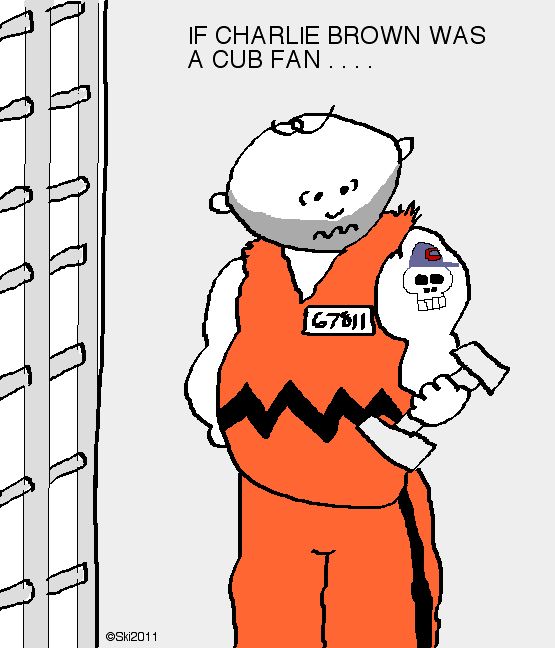
harsh critics. Lifelong fans have been imprisoned by the promises of hope
and change with each passing spring training. But this season has been a non-stop
train wreck. And the excuses fell flat. Hendry said that the Cubs got hit
with significant injuries at the beginning of the season. But other teams
had their share; including the lowly Pittsburgh Pirates who had 10 opening
day players on the DL but still clawed their way to first place in June. Yes,
the Cubs have been chasing Pittsburgh all season long. If not for the horrible
Houston Astros, the Cubs would be the worst team in the majors.
The Cubs continue to baffle
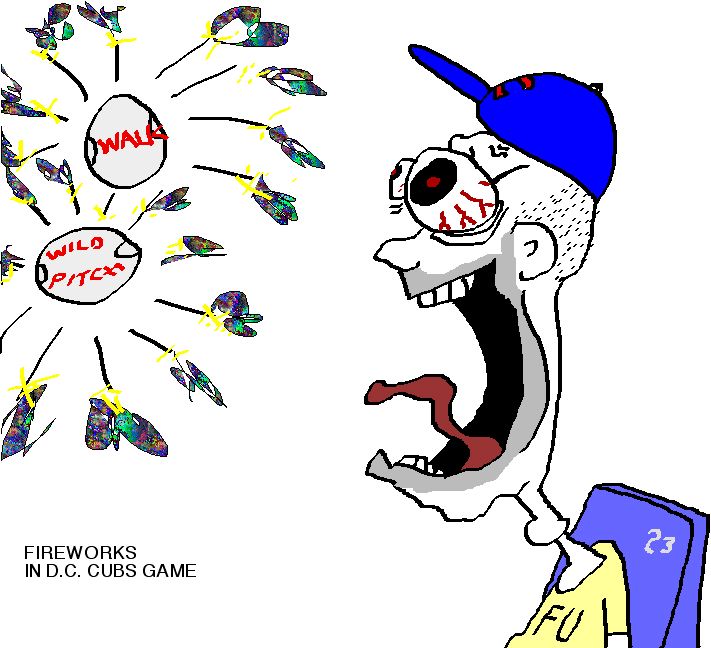
viewers with new ways to lose: walking the bases loaded then throwing a wild
pitch to end the game; dropping routine fly balls; running yourself out of
an inning; getting thrown out at home plate time and time again; making two
errors on one play; or having the opponent score two runs when the ball never
left the infield.
It is beyond mind boggling: it is madness.
But nothing changes. Quade
does not punish veterans for boneheaded plays, lack of fundamentals or total
lack of interest during games. No, manager Q only has anger for youngsters
like Castro and Barney when they make a rookie mistake. It instills bad habits,
lack of credibility, lack of respect through out the team when the manager
and coaching staff has no authority (actual or implied) to discipline the
millionaire malingerers in Cub uniforms.
The days of brain dead,
Cub kool-aid drinking fans are over. The Cubs attendance is likely to drop
from 10 to 15 percent this season. People have stopped watching, too, as the
local Comcast sports network is now showing more games on its “extra”
channel which is not on all Chicagoland cable systems. With Ricketts in the
shotgun seat, Hendry filled up the car with gasoline cans and sped toward
the canyon rim at 75 miles per hour. They are currently airborne in the middle
of the canyon at the pause in a Roadrunner cartoon. But Tommy Boy is just
here enjoying the ride. The more he speaks to the media (which is getting
harder and harder), the less intelligent he sounds. He lacks any vision, guidance
or basic understanding of why his team is playing so badly. He has delegated
all the operations to his employees, whether they are competent or not at
their jobs. Ricketts apparently never wanted to run the team, just buy it
for the status and fun of owning one like a rich kid getting a gold and diamond
studded hobby horse for Christmas.
There are many people not
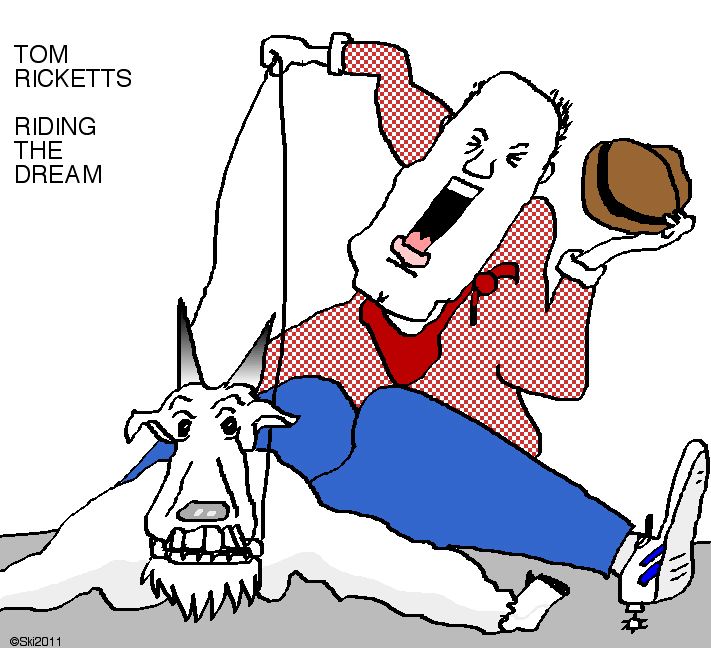
qualified to be on the Cubs. According to the team, star pitcher and leading
head case Carlos Zambrano was placed on the 30 day disqualified list for leaving
the team during a game after he was ejected for throwing at Chipper Jones.
The Braves had hit a modern record tying five home runs off Zambrano in the
game so his batting practice outing had to come to an end. But Z packed up
his locker and told attendants he was contemplating retirement. That comment
brought a Cheshire grin to Hendry would would be off the hook for another
$34 million if Zambrano really retired. Alas, Z's agent told the Cubs that
his client was not retiring, so the team did the next best thing: suspending
him without pay for 30 days. That means Ricketts gets to keep around $2 million
which helps off set the sagging revenue streams at Wrigley. But it also means
that Hendry will have to parade another round of gawd-awful washed up and
incompetent starting pitchers for the next month.
From all speculative accounts,
Ricketts is the new P.K. Wrigley. A cheap, hands-off caretaker who will let
sleeping dogs lie.
So that means that in all
probability Kenney and Hendry will return for next season. Ricketts is not
going to eat millions of dollars in executive and coaching staff salaries
to blow up the organizational chart and start from scratch with an experienced
(thus expensive) club president. The names of old school builders like Pat
Gillick, Bobby Cox or Jack McKeon are too old to start a five year rebuilding
project. For the Cubs to change the structure and culture, the entire organization
needs to be wiped out and rebuilt player by player. And at each level of the
minor leagues, a set training program will have to be put into place, with
accountability, in order for real development of prospects to come to light.
Ricketts does not have the stomach or mind to oversee such minute details
to create a championship organization.
Instead, he will let his
inherited help continue to guide the club through their new buzzwords like
“investing in minor leagues.” It is one thing to spend more money
on unproven talent, but just by spending more money does not equate to spending
wisely. In the last two years, the Cubs have overdrafted players in the first
round and thus overpaying them when other teams would have rated them 5 or
10 rounds below. Hendry is paying over-MLB slot bonuses on lower round prospects
so he can sign them. Hendry is a spendthrift with money; spending for spending's
sake. Look at the major league roster: the huge contracts on Zambrano, Soriano,
Bradley (since dealt), Ramirez . . . unmoveable at the trade deadline.
But Ricketts has appointed
Hendry the captain of the Cubs ship for the foreseeable future. And that is
what is more upsetting to Cub fans than the team's actual record.